The House

WHERE TRADITION MEETS MODERN

A century-old house, gently awakened.

"Built in 1924, lived in for generations, and now carefully renovated — Pelion Muse carries a hundred years of village life within its walls."

The History of the House

The house was built in 1924 by Ioannis D. Voyatzis, a native of Agios Georgios. The first floor served as the family's winter residence, while the two-chambered katoi — the stone undercroft below — was built for the agricultural work of the estate and remained in daily use from 1924 until the early 1990s.

For nearly seventy years, the lower chambers hummed with the rhythm of the olive season: sorting, brining, pressing, storing. Families gathered here in autumn around the great wooden vats, then retreated upstairs to the warm fireplaces of the winter home. Every beam, every stone, every carved door still carries the traces of that working life.

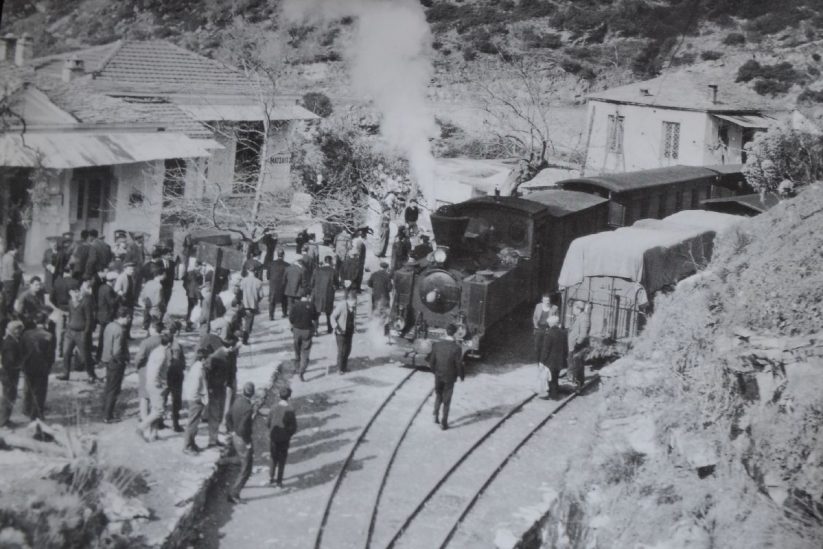
The house stands right next to the Ano Gatzea train station — the stop on the line of the legendary Pelion railway. It was this narrow-gauge train, winding through chestnut forests and stone villages at the turn of the 20th century, that first drew visitors to Ano Gatzea and made the village known beyond the peninsula. A hundred years on, the whistle of the Pelion train still passes the garden wall.

"The house has always known what it is. We simply had to listen carefully enough to follow."
— The Family
The house and gardens
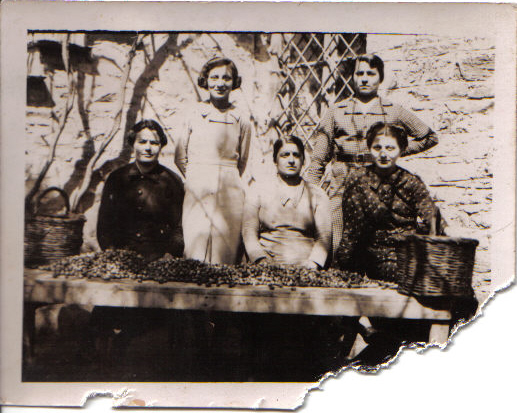
Sorting olives outside the house, archival photograph
Pre-war photograph of olive sorting outside the house
The village of Ano Gatzea

The Olive & Olive Oil Museum

In 2007, the two-chambered katoi of the house was transformed into a small museum dedicated to the craft that shaped village life in Pelion for a century, operating until 2020.

The larger chamber — over 100 square metres — served as the main museum, displaying around a hundred objects covering cultivation, harvest, cooperage and sorting, every one of them found on site where a working olive enterprise once hummed with seasonal life. The smaller room of about 20 square metres, whose walls still hold four large barrels embedded into the stone, was reimagined as a screening room with seating, projector and screen, and home to rotating temporary exhibitions.

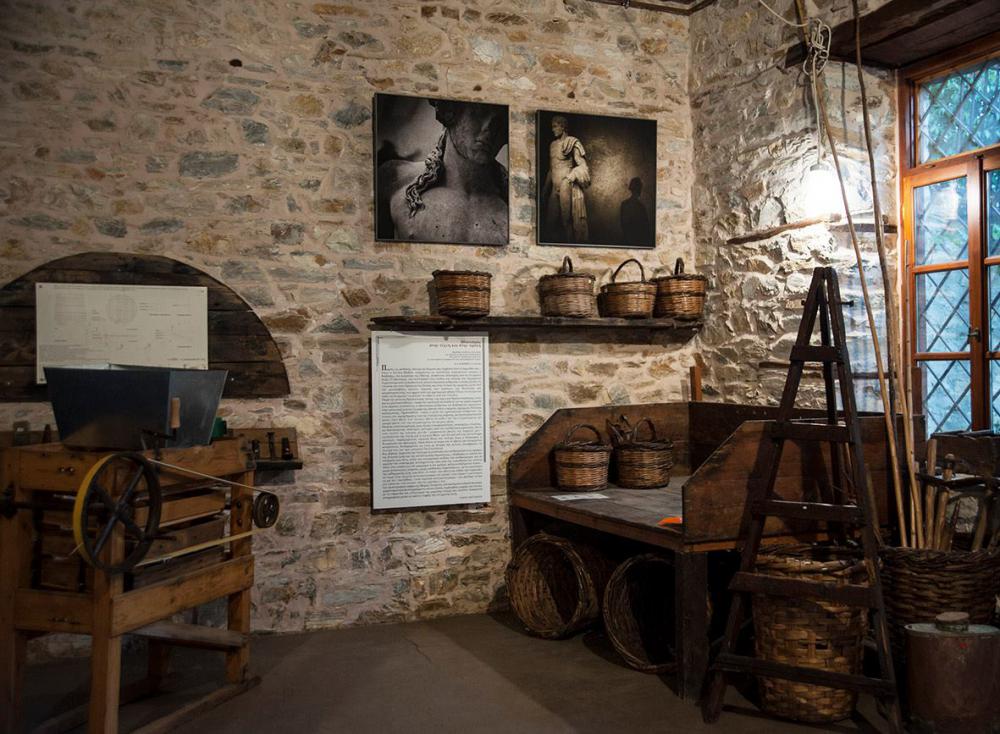
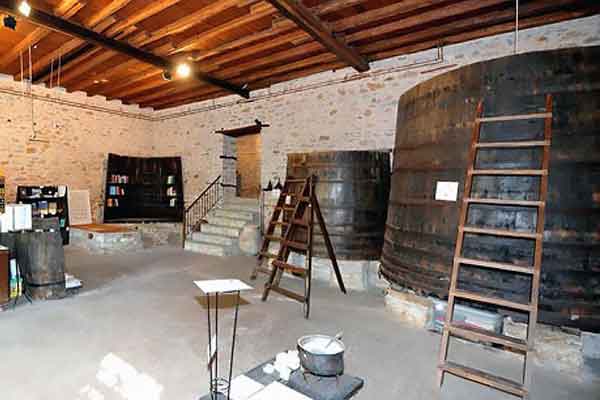
The main hall was arranged as a journey through the life of the olive. Entering from the right, visitors first met the tools of cultivation — hoes, pruning saws, animal yokes, sprayers — then the implements of the harvest: baskets of every size, ladders, tripods and the original wooden sorting counter. The next section was devoted to cooperage, with two beautifully preserved brining vats where olives were once salted to become the famous Olives de Volos — one holding 7,000 okas, the other 2,500. Alongside them sat the walkways and ladders used to tend the brine, and a set of metal funnels that were not for liquid at all: they are the calibres that measured the size of each olive. At the end, the restored scale with its weights closes the quiet story of how the fruit was gathered, sorted, pressed and sold.

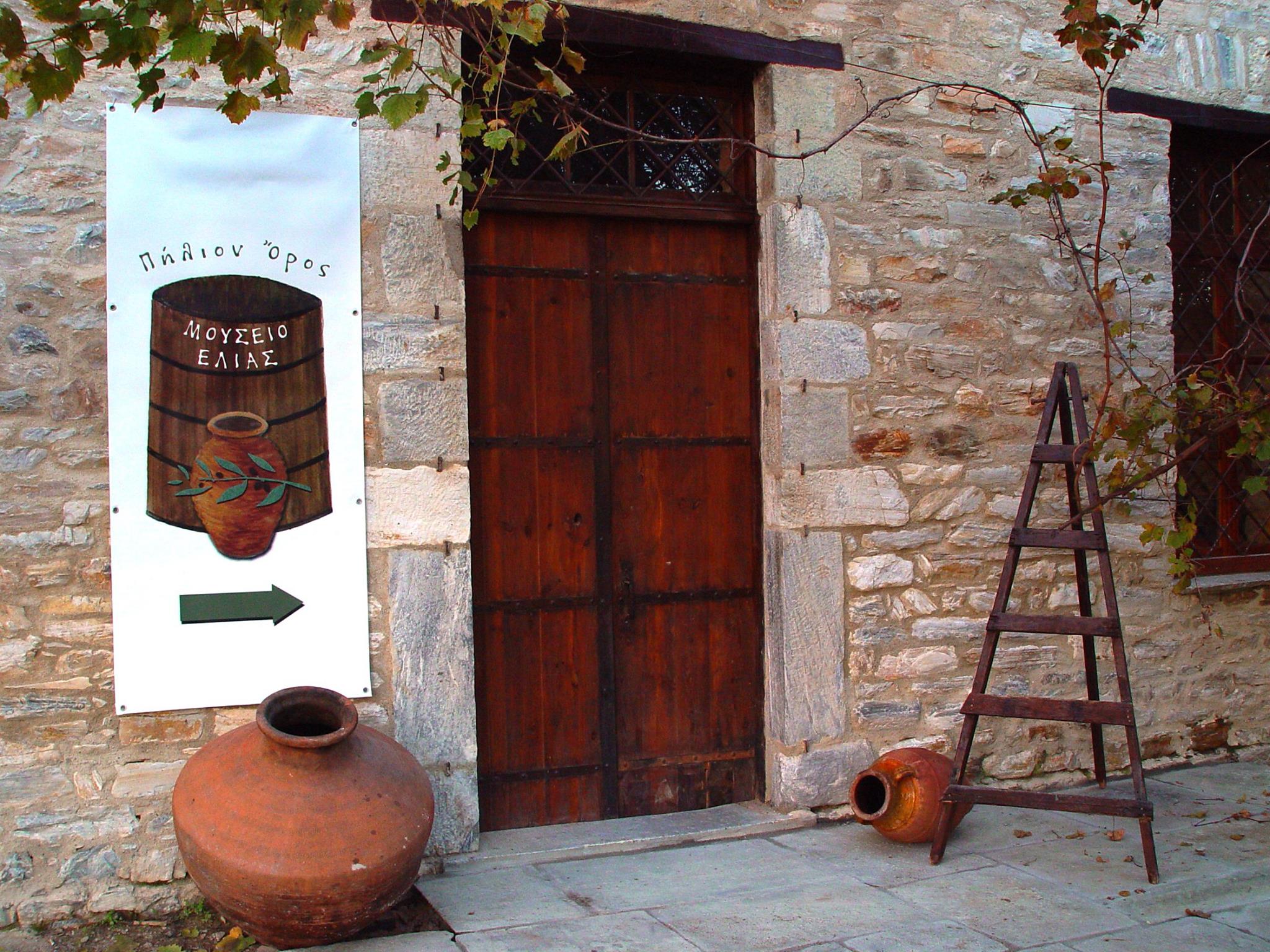
Entrance of the restored museum building
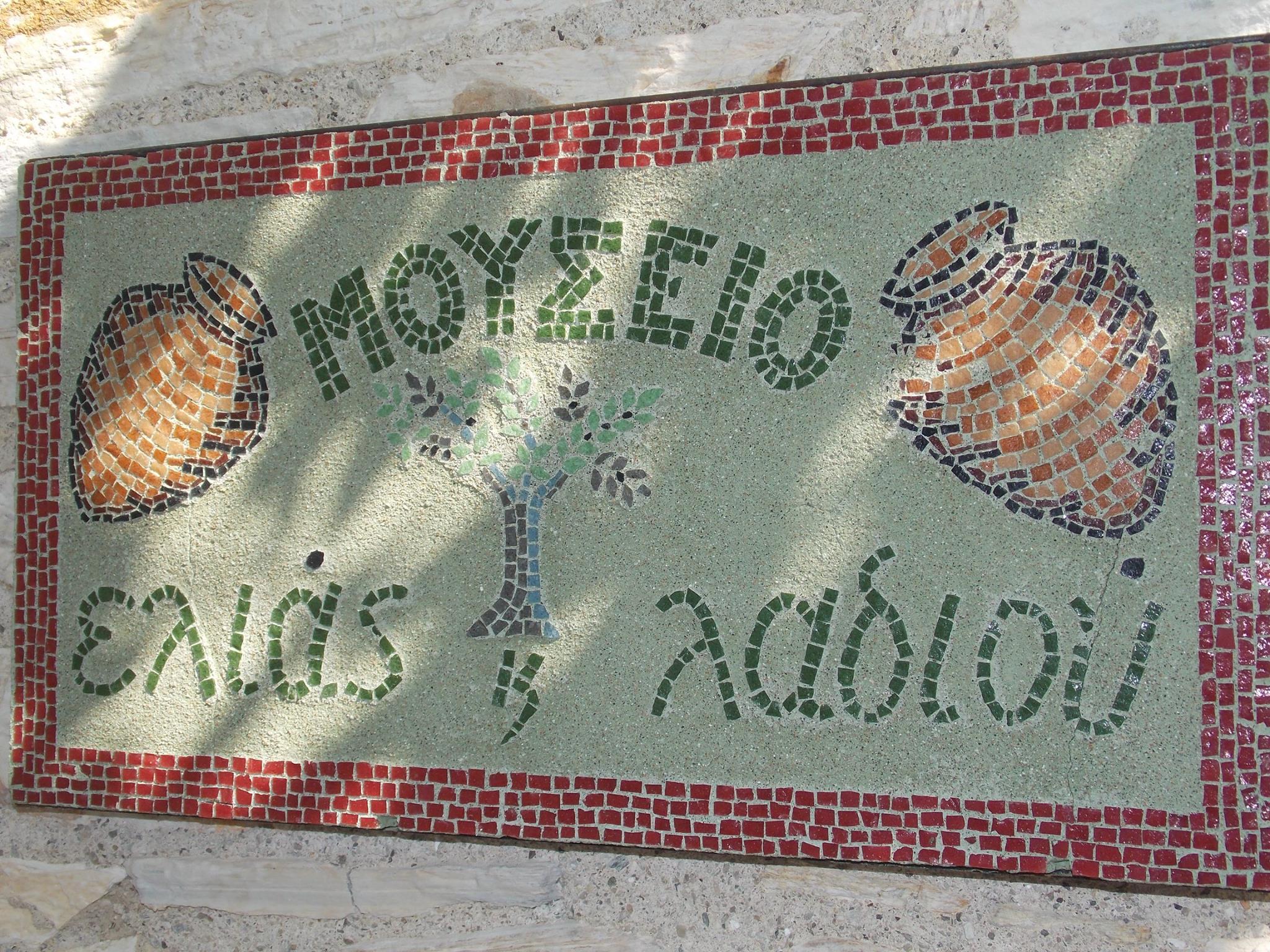
The Olive & Olive Oil Museum signage
Detail of museum artefacts
Interior of the Olive Museum with preserved vats and tools

The House Today

A century after it was first built, the house has been carefully and lovingly renovated — with a single, clear aim: to become a world-class retreat that honours its origins while offering everything a modern guest could need.

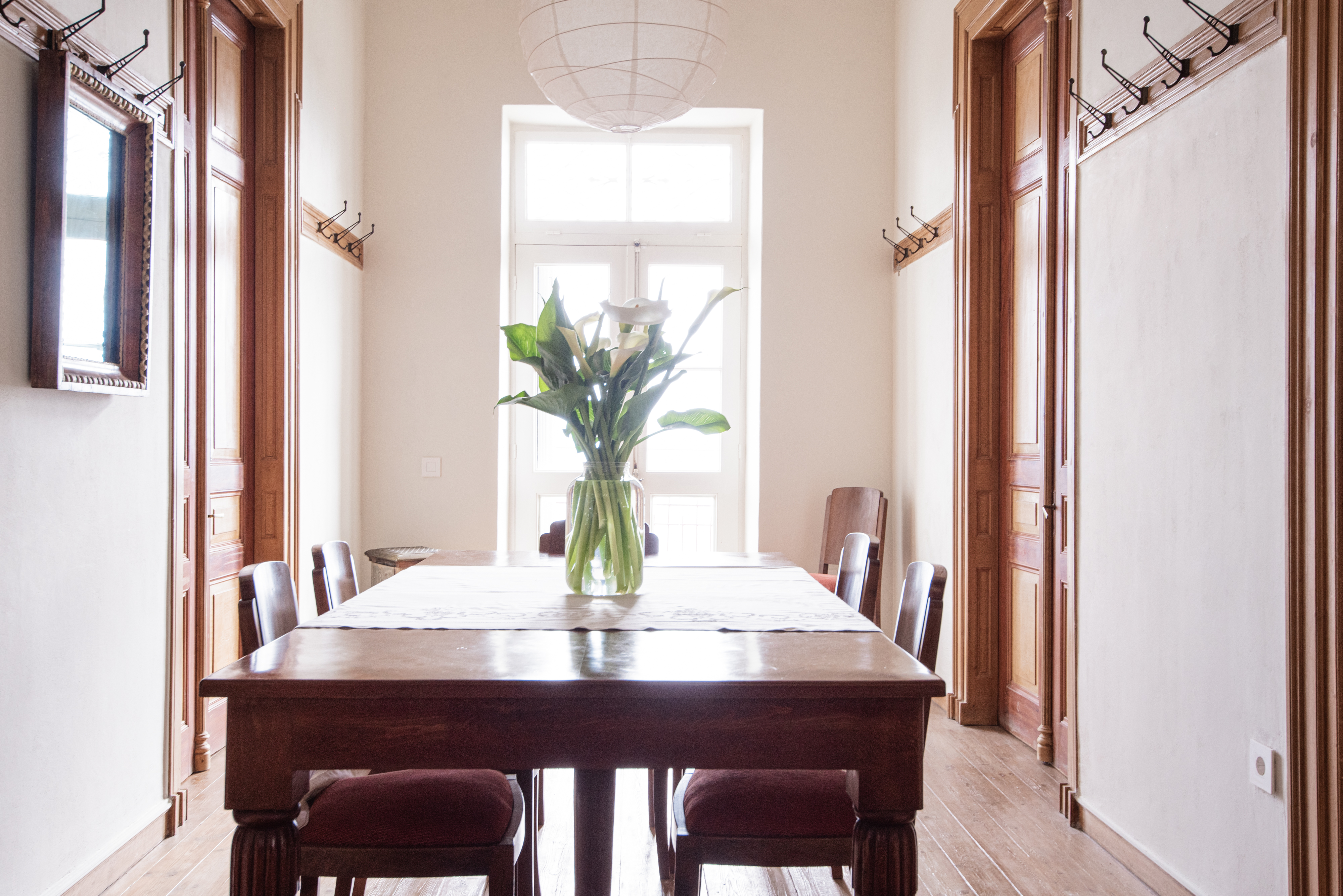
The original bones have all been preserved: the stone walls, the hand-carved doors, the wide pine floors, the high ceilings, the old fireplace. Around them, a full contemporary renovation — silent air-conditioning, a fully equipped kitchen, renovated en-suite bathrooms with heated towel rails, fast WiFi, thoughtful lighting — ensures nothing is missing for an effortless stay.

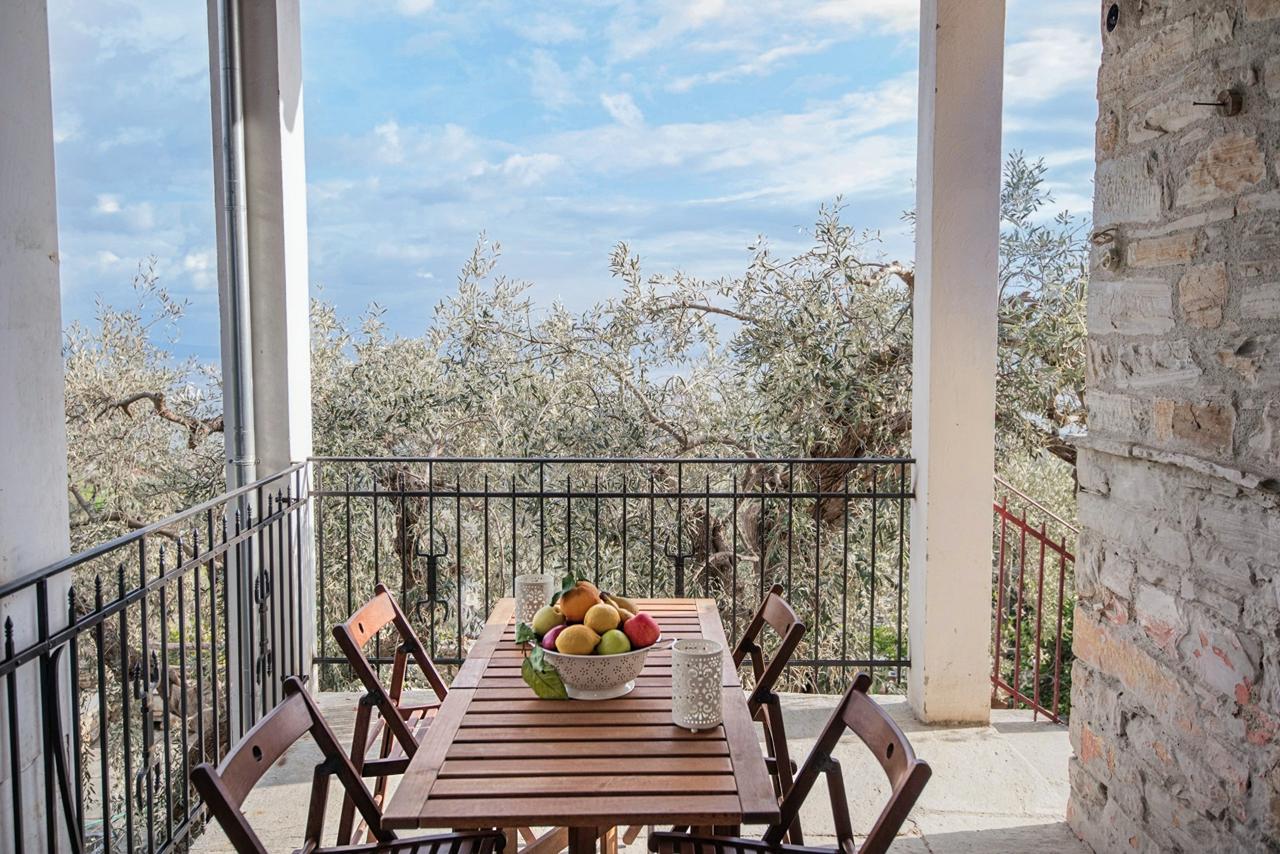
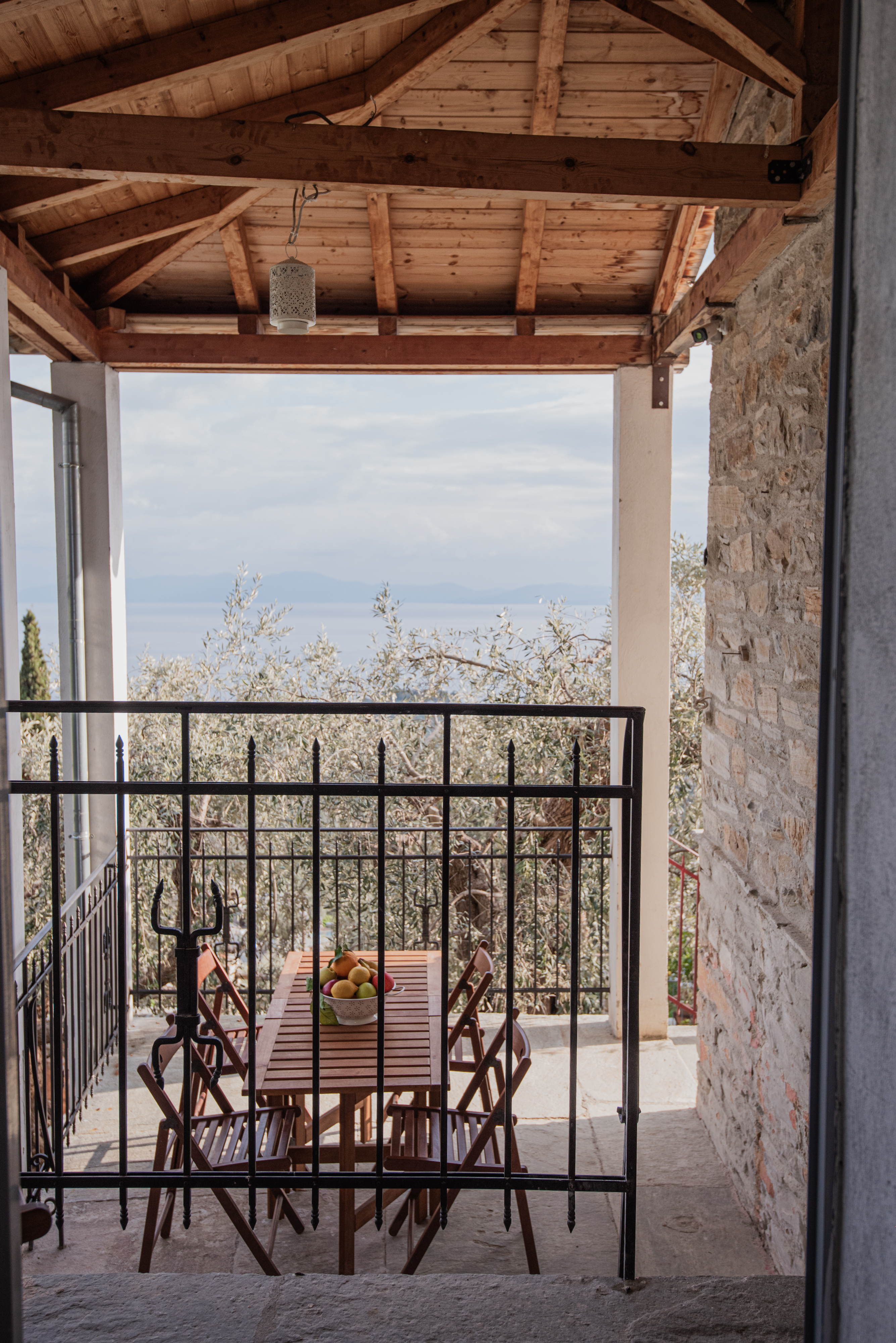
The setting does the rest. Surrounded by olive groves and with sea views through the leaves, Pelion Muse offers the stillness that makes this corner of Greece unforgettable — a place to rest, write, walk, gather, and simply slow down.

  • Built in 1924, renovated in 2025
  • Sleeps up to 6 across 3 bedrooms with en-suite bathrooms
  • Fully equipped kitchen
  • Fast WiFi
  • Surrounded by olive groves, with sea views through the leaves
  • Offering amazing sea views
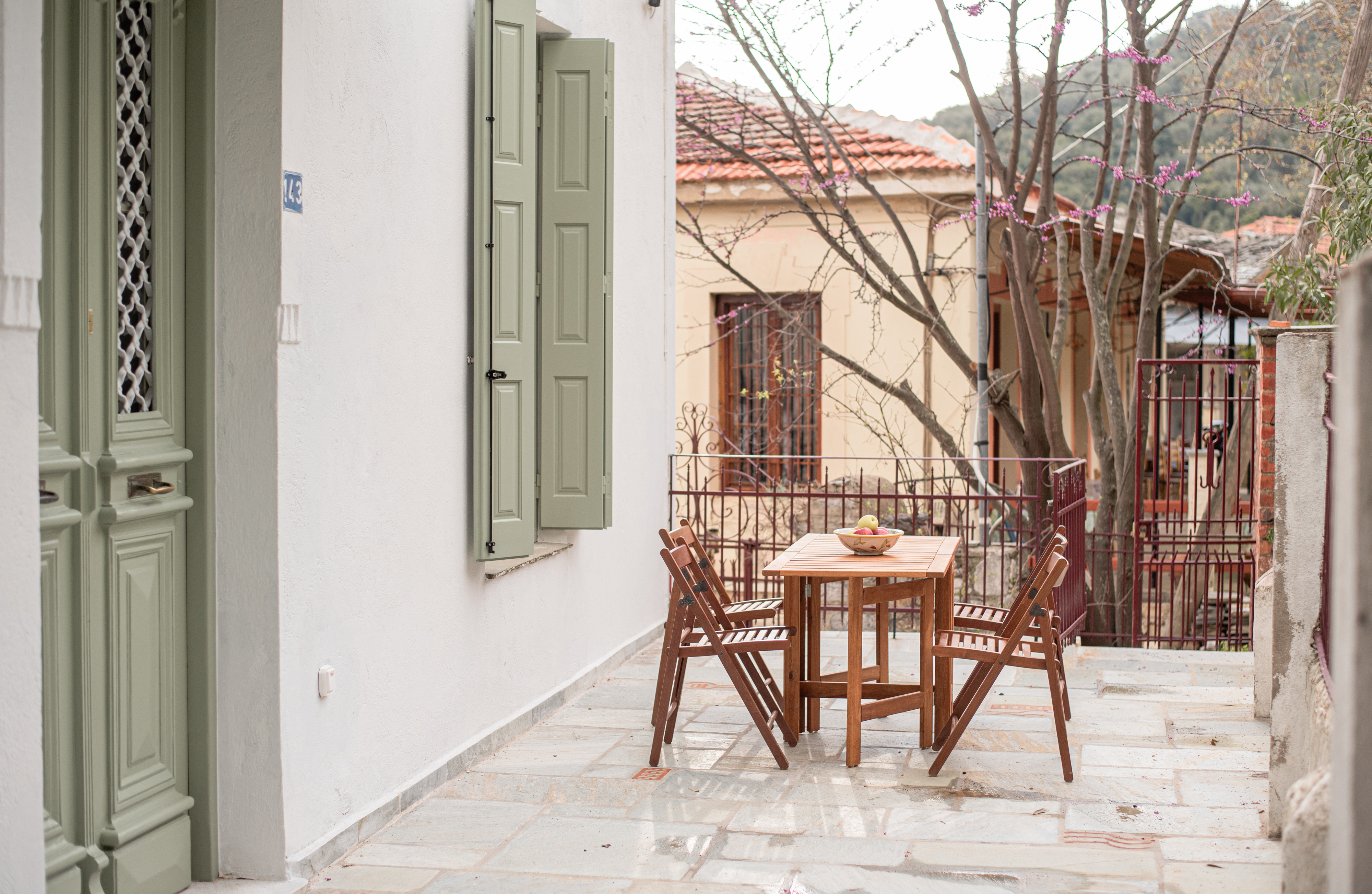
The renovated house today, seen from the garden
The stone terrace of the renovated house
Al-fresco dining on the terrace
The living room of the renovated house

Discover the rooms & spaces