Discover Pelion

A PERFECT CORNER OF GREECE

Where the centaurs lived

"Pelion is not one landscape, but many. In a single hour you can stand in chestnut forest, eat wild herbs from the roadside, and swim in water so clear it looks painted."

The Pelion peninsula (Πήλιο) stretches from the city of Volos into the Aegean, separating the calm waters of the Pagasetic Gulf from the open Sporades Sea. In Greek mythology, Mount Pelion was the home of the centaurs and the birthplace of Achilles. In reality, it is one of the most beautiful regions in all of Greece - dense chestnut forests tumbling into turquoise bays, traditional stone villages clinging to steep hillsides, a legendary narrow-gauge train, and a food culture rooted in the wild herbs, chestnuts and olive oil of the mountain.

Pelion Muse sits in Ano Gatzea, a traditional village 20' away from Volos - high enough to see the Pagasetic Gulf, low enough to feel the warmth of the olive groves.

Ano Gatzea

Perched on a steep hillside between Lechonia and Kala Nera, Ano Gatzea remains - thankfully - a village still unknown to most. Those who visit are not tourists, but travelers who seek the authentic in their journeys.

For visitors looking to stay in Pelion away from the crowds, Ano Gatzea offers a rare balance. It is quiet, genuinely lived-in and surrounded by nature, yet close enough to the coast road and the city of Volos to be easy to reach.

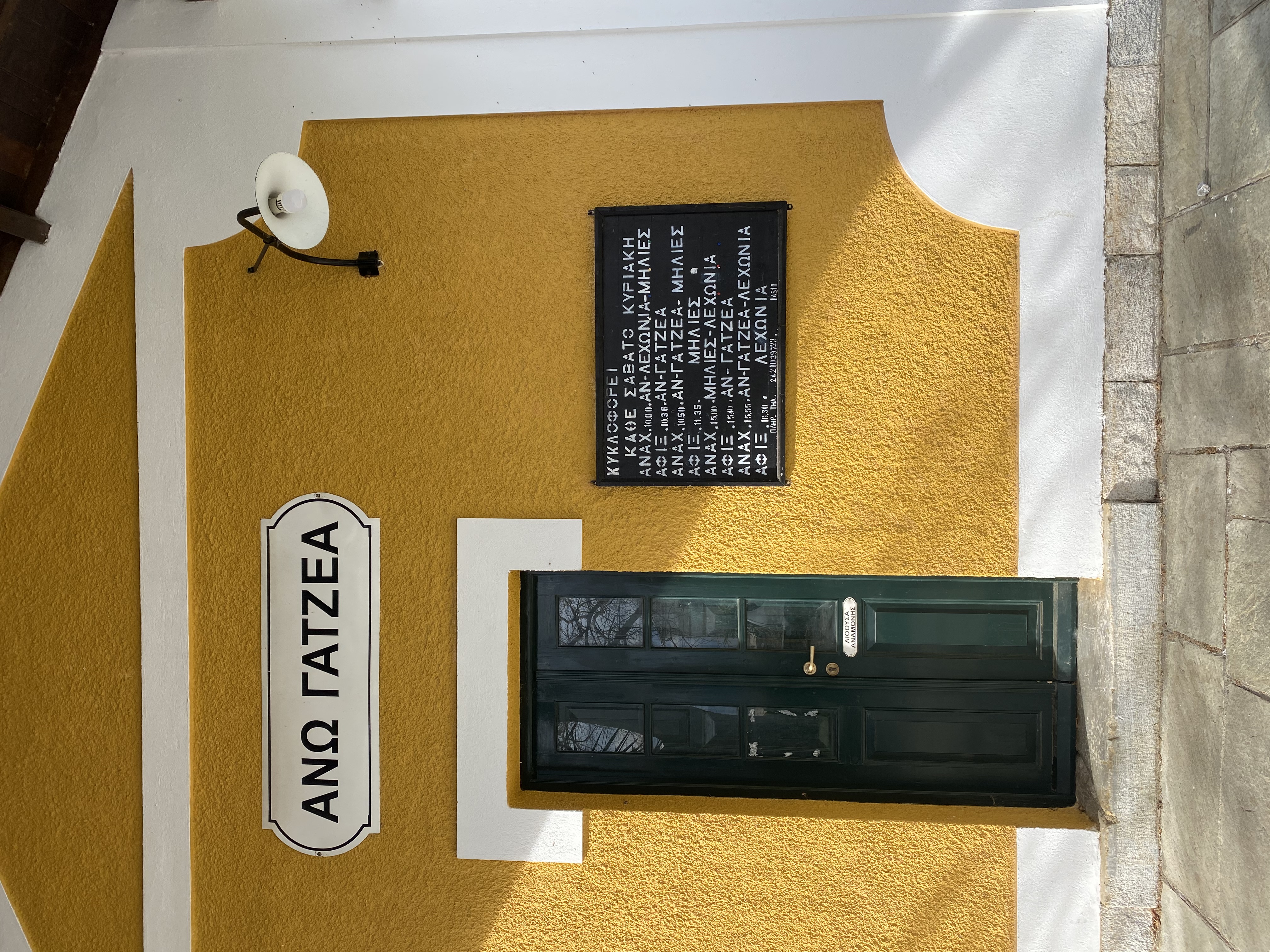
Ano Gatzea's cobblestone roads, narrow and steeply climbing, lead to the highest point of the village - crowned by a true gem: the old railway station, its walls painted in ochre that glows under the summer midday sun and warms the landscape on misty winter mornings. Pelion Muse is one of the historic houses in the village - a carefully renovated 1924 stone house next to the train station. It is an ideal base for exploring the rest of the peninsula: the famous villages of Milies, Vizitsa and Pinakates, the Pagasetic beaches, and the hiking trails of Mount Pelion are all within a short drive.
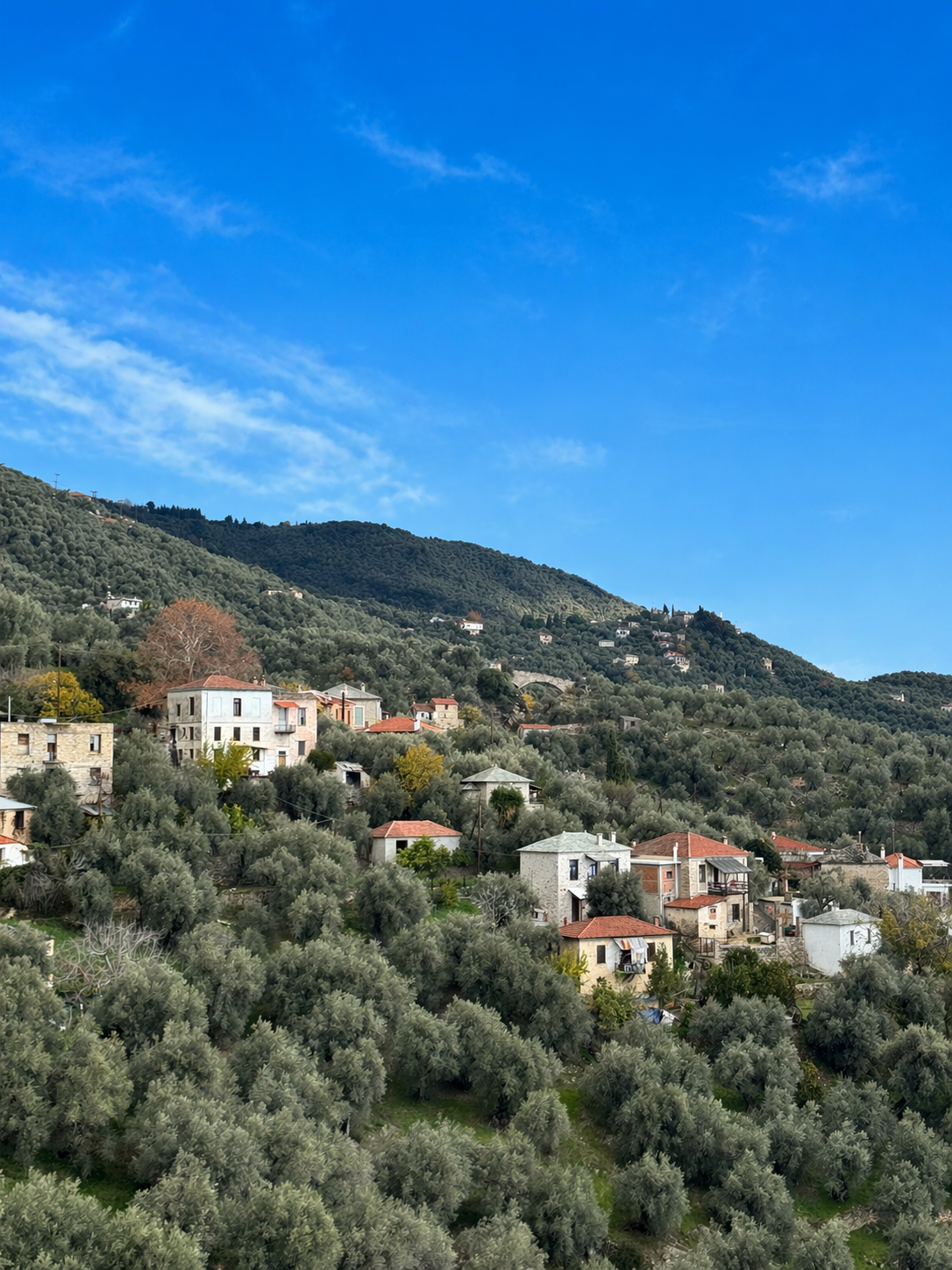
Pelion Muse villa surrounded by olive groves in Ano Gatzea, Pelion
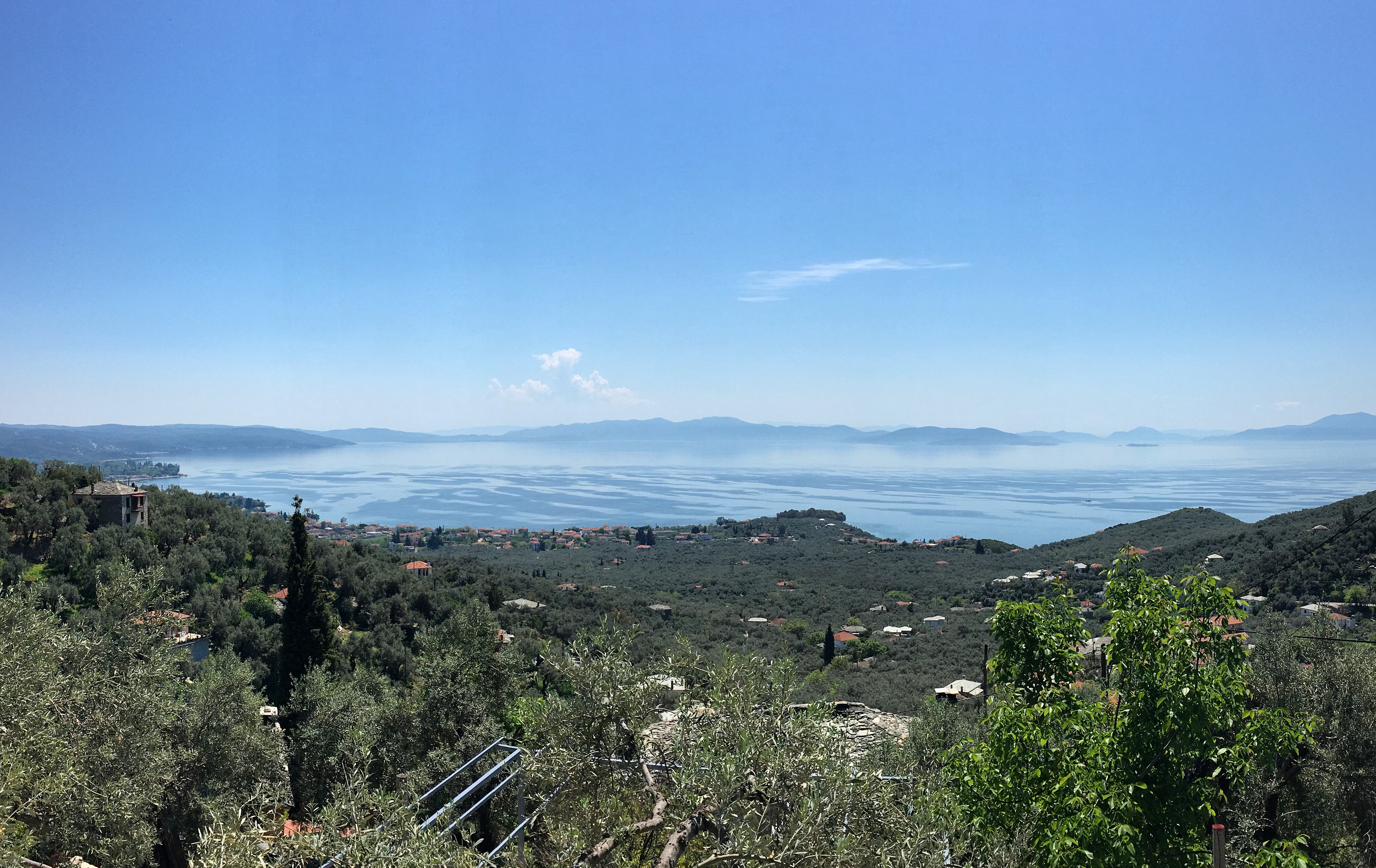
Sea view from Ano Gatzea village over the Pagasetic Gulf, Pelion

The Pelion Train — Moutzouris

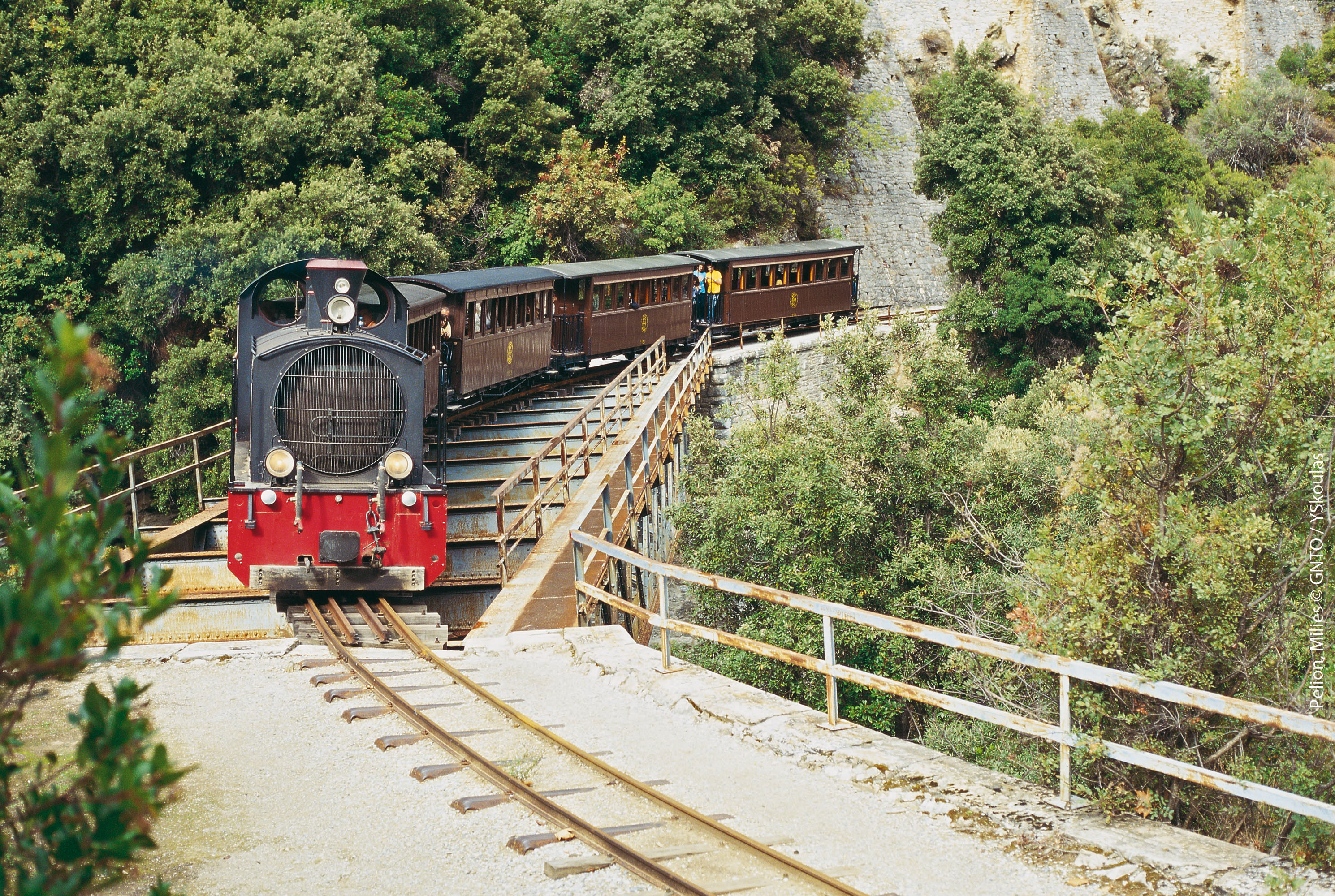
The Pelion Railway - known affectionately as the Moutzouris, "the sooty one" - is one of the most loved historic trains in Greece and a cultural landmark of the entire peninsula. Running on a narrow 60-centimetre gauge, it is among the narrowest railways in the world and a protected monument of the Greek State.

Designed at the end of the 19th century by the Italian engineer Evaristo de Chirico - father of the surrealist painter Giorgio de Chirico - the line was built in phases between 1892 and 1903 to connect the port city of Volos with the villages of Mount Pelion. Today the heritage route runs from Ano Lechonia through Ano Gatzea, up to the terminus at Milies, crossing the iconic iron bridge at Taxiarches (built in the school of Gustave Eiffel) and a series of dramatic stone viaducts.

The station at Ano Gatzea sits immediately next to Pelion Muse - one of the most scenic train journeys in Greece begins a few steps from your door. The slow, 90-minute climb through chestnut forest is an experience in itself: a favourite of families, photographers and travellers drawn to the nostalgia of rail travel. Scheduled runs take place on weekends and during the summer holidays.

Ano Gatzea train station on the historic Moutzouris narrow-gauge railway, Pelion
The Moutzouris narrow-gauge train arriving at Milies terminus, Pelion

The Beaches of Pelion

Pelion has two coastlines, and each one has its own character. The western coast runs along the Pagasetic Gulf - a calm, protected inner sea with warm, crystal-clear water, ideal for families and easy swimming. The eastern coast faces the open Aegean, with dramatic cliffs, pine-fringed coves and some of the most photographed beaches in all of Greece.

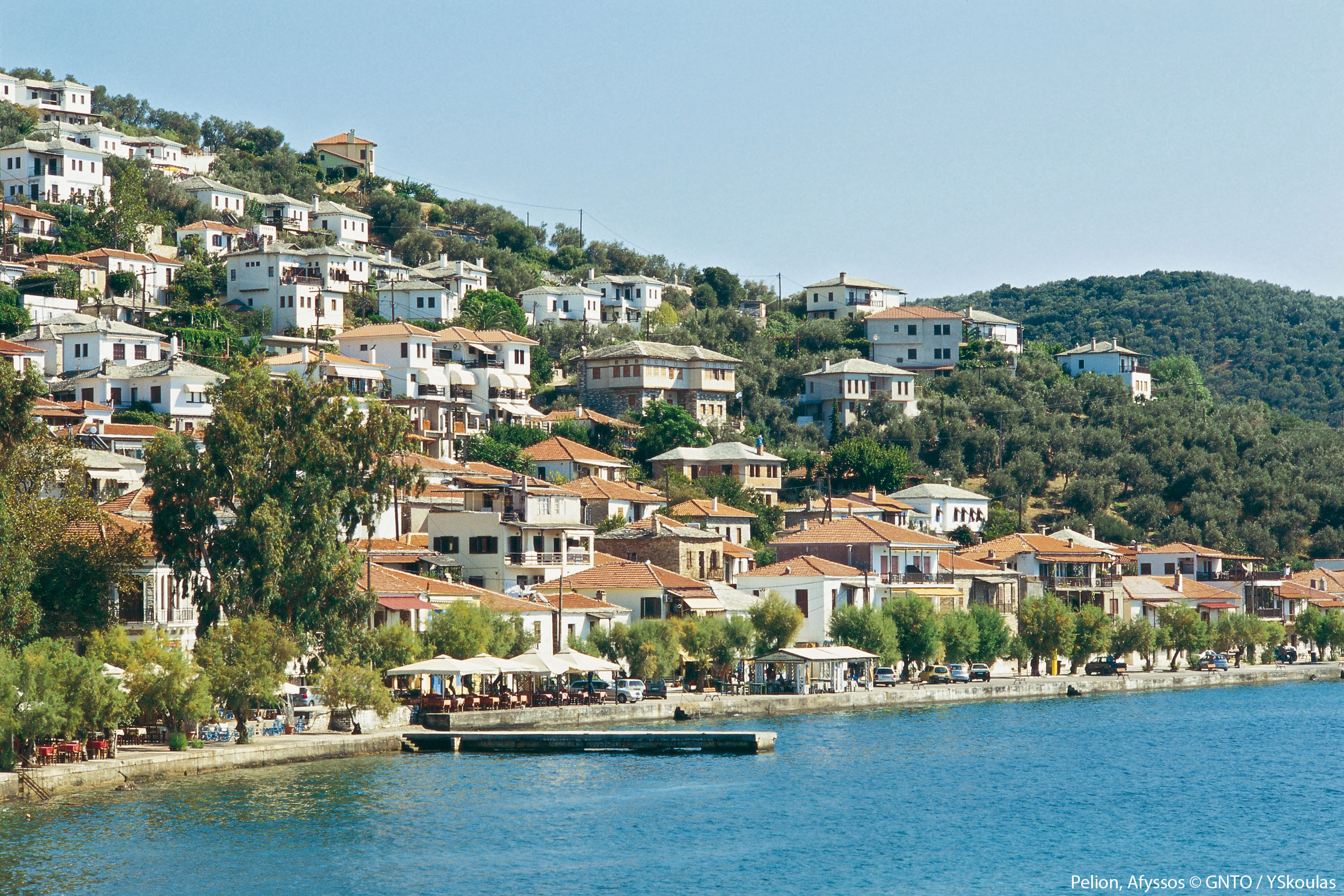
From Ano Gatzea, the nearest Pagasetic beaches are only a few minutes' drive away. Kato Gatzea, Kala Nera and Afissos are all within ten minutes by car - pebble and sand coves backed by plane trees and family-run tavernas, perfect for long summer afternoons. In total, there are more than two dozen swimmable beaches within half an hour of the house.

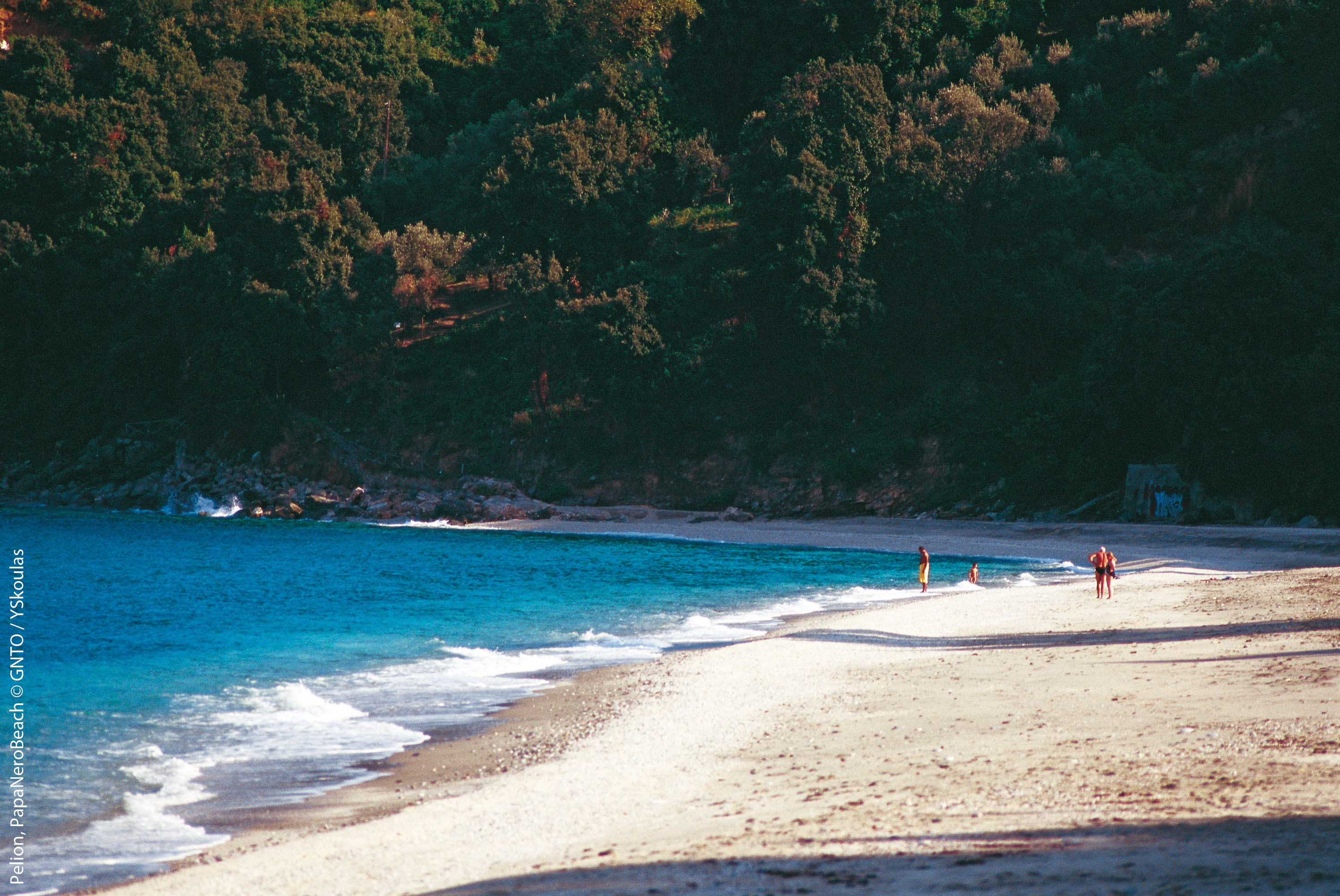
A slightly longer drive over the mountain brings you to the famous east coast. Damouchari - where parts of Mamma Mia! were filmed - is about forty minutes away, as are Fakistra, Mylopotamos with its iconic pierced-rock cove, Papa Nero and Agios Ioannis. These are among the best beaches in Pelion, and on almost any "best beaches in Greece" list you will find at least one of them.

Afyssos village beach on the Pagasetic Gulf, Pelion
Papa Nero beach on the Aegean coast of Pelion, Greece
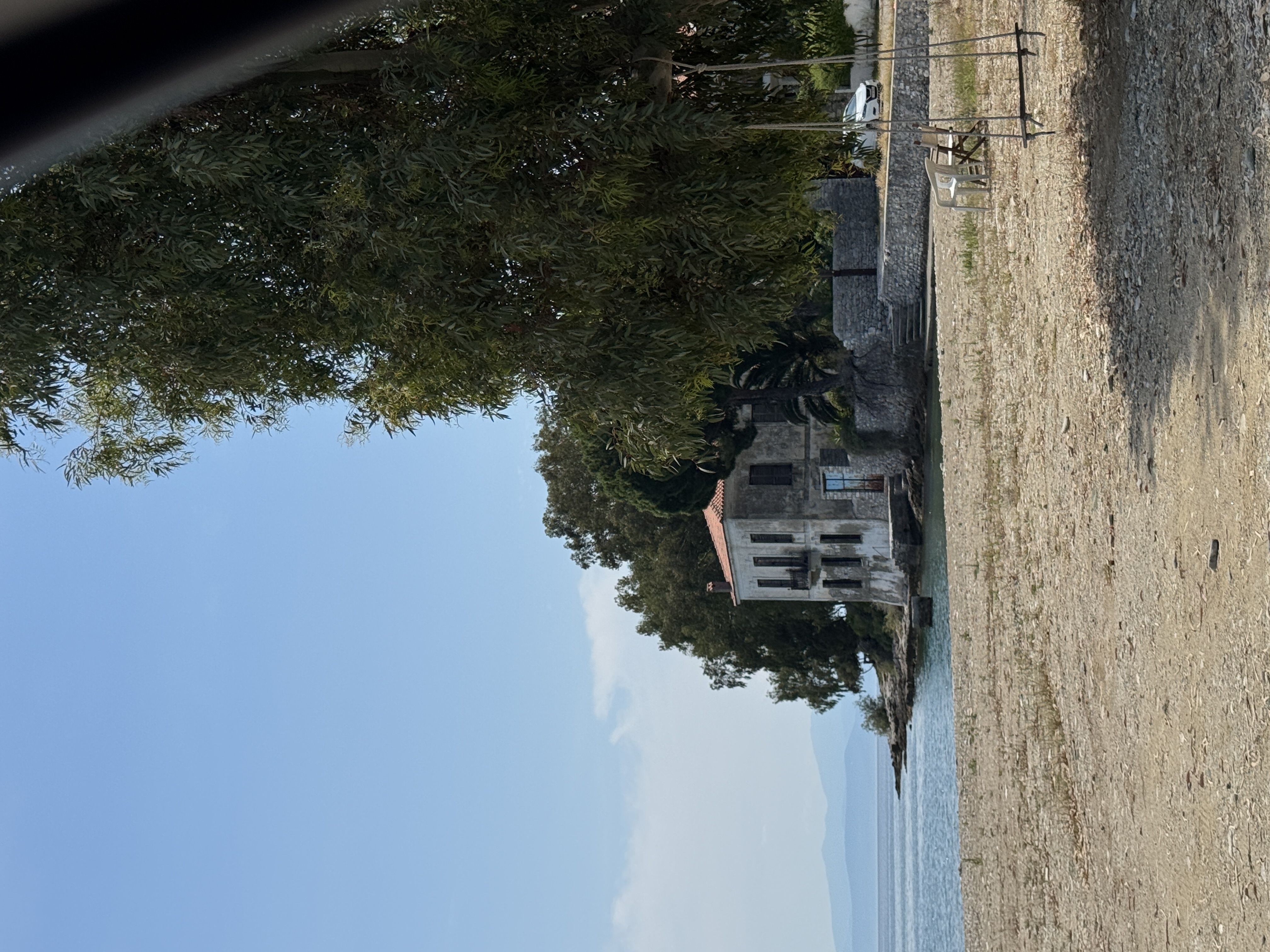
Kato Gatzea beach with olive groves and sea views, Pelion Riviera

The Mountain

Mount Pelion rises to 1,624 metres above the peninsula, crowned by the peak of Pourianos Stavros. In Greek mythology, these slopes were the home of the centaurs and the birthplace of the hero Achilles, tutored here by the wise centaur Chiron. Today the mountain is one of the greenest and most biodiverse in Greece — dense chestnut, beech and oak forest, wild herbs used in local cuisine, and a network of ancient stone mule paths, the kalderimi, connecting its traditional villages.

The historic villages of Pelion are famous across Greece. Makrinitsa, the "balcony of Pelion", hangs over the gulf; Portaria is known for its running springs; Milies is the cultural heart of the mountain and the terminus of the Moutzouris train; and the timeless Tsagarada, Pinakates and Vizitsa feel untouched by time. Each is a short drive from Ano Gatzea, and together they form one of the most atmospheric landscapes for slow travel in Greece.

For walkers, Pelion is a paradise. Well-maintained kalderimi routes pass through chestnut forest, over spring streams and small stone bridges, linking village to village — the walk from Vizitsa to Milies, or Tsagarada down to Damouchari, are classics of Greek hiking. In winter, the upper slopes hold enough snow for the small Agriolefkes ski resort, while the coast below stays mild — a rare combination anywhere in Greece.

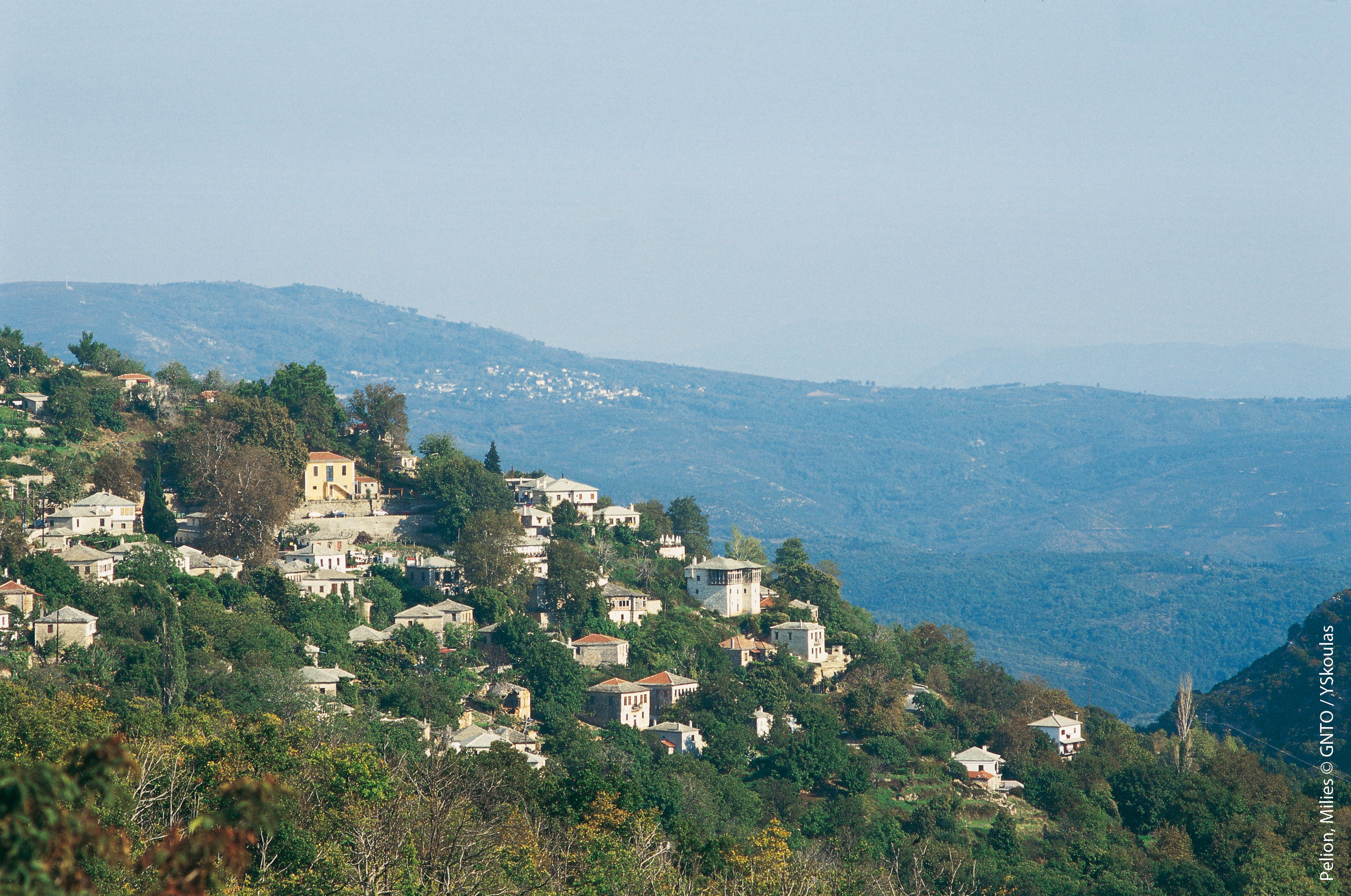
Milies village on Mount Pelion, Greece
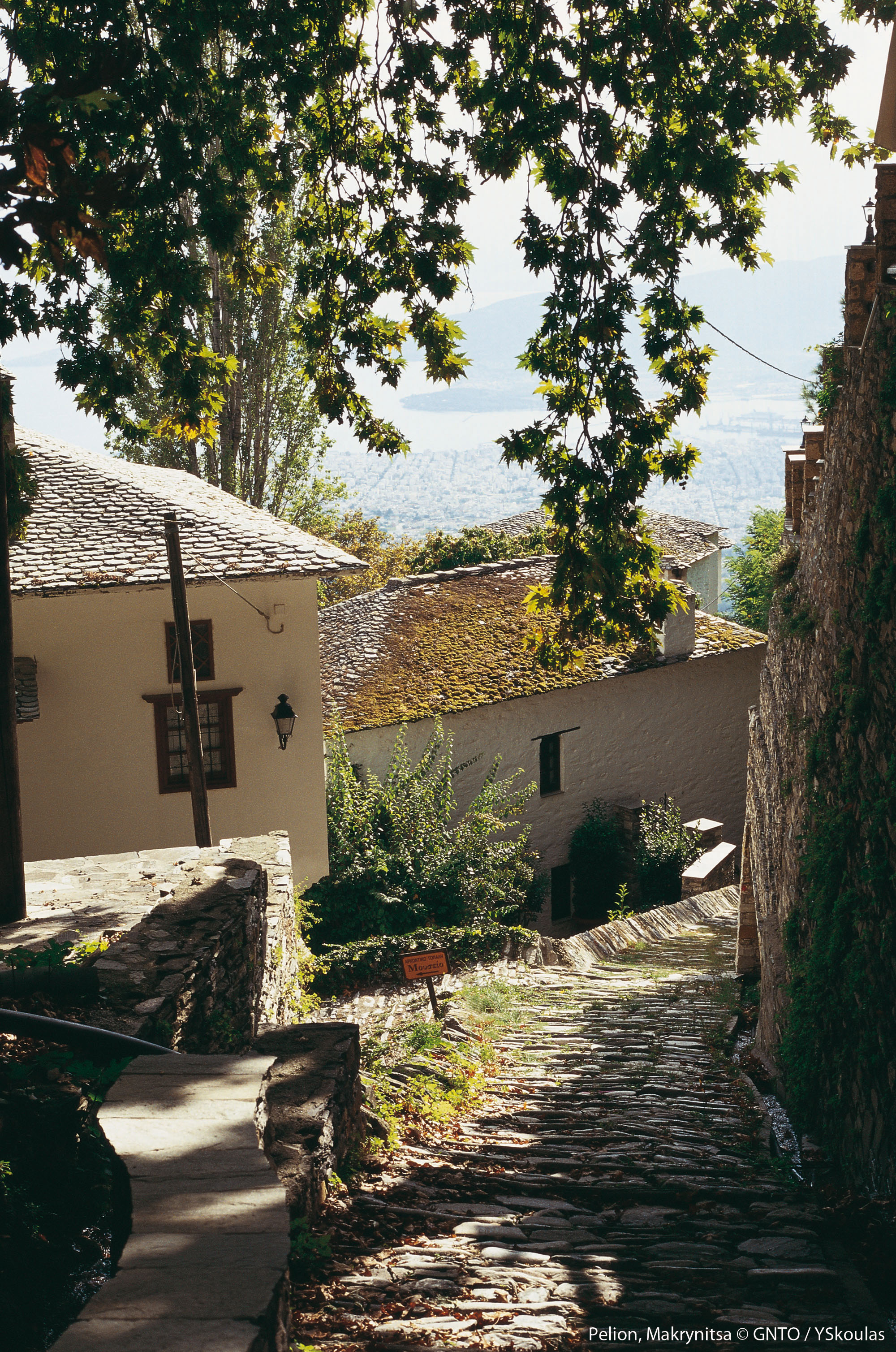
Stone alley in Makrinitsa village, Mount Pelion, Greece

What to do around Pelion Muse

Edit mode on — click any highlighted text to edit